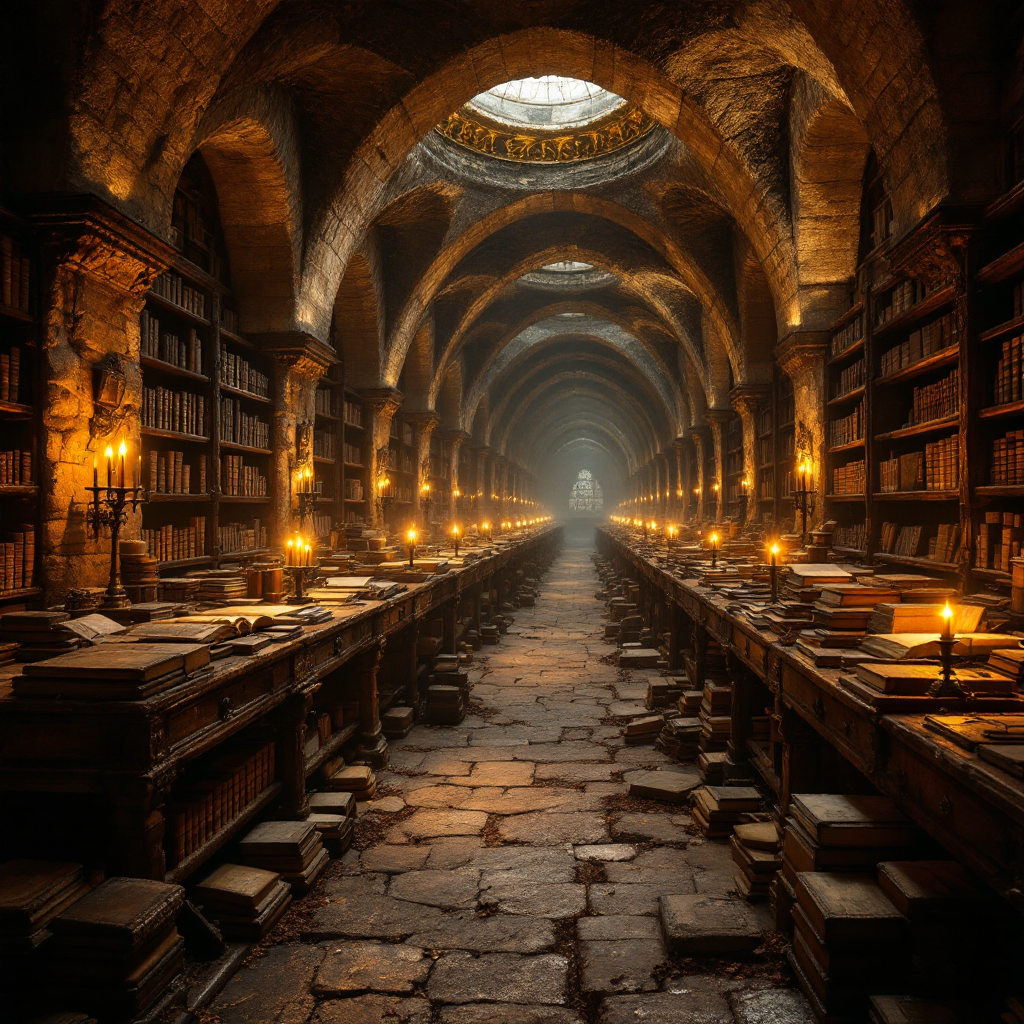
The Vatican Secret Archives hold more than old manuscripts and dusty correspondence. They contain the suppressed record of what the Church chose to hide, what it edited, and what it never wanted the public to see. Officially renamed the Vatican Apostolic Archives in 2019, the collection spans over fifty miles of shelving, housing documents from papal decrees to correspondence with kings, from Inquisition trial records to letters that could rewrite the accepted history of Christianity. Access is restricted, applications are vetted, and entire sections remain closed to outside researchers. The question isn’t what’s inside. The question is why so much remains locked.
The Archive No One Was Meant to See
For centuries, the Vatican Secret Archives were exactly that: secret. The name itself, Archivum Secretum Vaticanum, derives from the Latin secretum, meaning private, but the effect was the same. Knowledge was gatekept. Scholars were denied entry. Even the existence of certain documents was unacknowledged until external pressure forced partial disclosure. The archive was established in its current form in 1612 under Pope Paul V, consolidating centuries of accumulated papal records into a single, controlled repository. Before that, documents were scattered, hidden, or destroyed during periods of upheaval.
What changed in 2019 wasn’t the contents. It was the branding. Pope Francis rebranded the archive as the Vatican Apostolic Archives, a move framed as clarification rather than transparency. The shelves didn’t open wider. The vetting process didn’t ease. Researchers still need written justification, academic credentials, and explicit permission to access materials, and even then, only selectively. Entire sections remain classified, including files related to post-World War II activities, certain Inquisition records, and correspondence from the 20th century that the Church deems too sensitive for public review.
The Vatican claims the restrictions exist to protect fragile materials and prevent misuse of sensitive information. But the pattern across history tells a different story. Every institution that has controlled access to knowledge has used that control to shape perception. When the Church held the Bible in Latin for over a millennium, it wasn’t protecting scripture. It was protecting its role as the sole interpreter of it. The same logic applies here. The Vatican Secret Archives function as the institutional memory of an organization that has spent two millennia positioning itself as the mediator between humanity and God.
What We Know Is Inside
Some contents of the Vatican Secret Archives have been disclosed, either through limited scholarly access or because external pressure made concealment untenable. The Inquisition trials are documented in horrifying detail: interrogation transcripts, torture authorization, execution orders. Galileo’s trial records sit on those shelves, preserved evidence of the Church condemning heliocentrism as heresy. Letters from Henry VIII pleading for annulment reveal the political maneuvering behind the English Reformation. Correspondence with Martin Luther, excommunication decrees, and centuries of diplomatic exchanges with monarchs and rival powers fill the vaults.
But those are the documents the Church allowed researchers to see. What remains hidden is harder to catalog but no less significant. Researchers who have gained access report gaps in the archives, missing years, documents referenced in indices that no longer exist, and entire categories marked inaccessible without explanation. Some estimate that fewer than half of the total documents have ever been reviewed by independent scholars. The rest remain behind closed doors, their contents known only to a select group of Vatican insiders.
Historians have documented the destruction of records during key moments of institutional crisis. The sack of Rome in 1527 resulted in the loss or deliberate disposal of sensitive materials. The suppression of the Jesuits in 1773 triggered another wave of document purging. Even in the modern era, the Church has been accused of sanitizing its archives before limited access was granted, removing materials that could implicate the institution in collaboration, corruption, or cover-up. The archive is not a neutral historical record. It is a curated one, and the curator has an agenda.
The Gospels That Didn’t Make the Cut
Among the most significant suppressions tied to the broader Vatican apparatus are the Gnostic texts discovered at Nag Hammadi in 1945. These weren’t found in the Vatican Secret Archives themselves, but their exclusion from the biblical canon was a decision made by the same institution that now controls access to the archive. The Gospel of Thomas, the Gospel of Mary, the Gospel of Philip, and the Secret Book of John were all early Christian writings that emphasized inner transformation, direct knowing of the divine, and personal spiritual authority. Every one of them was labeled heresy and excluded from the Bible assembled at the Council of Nicaea and later councils.
Why? Because they undermined the hierarchy the Church was building. A gospel that teaches direct access to God has no need for priests, bishops, or papal authority. A text that elevates Mary Magdalene as a spiritual teacher threatens the all-male priesthood. A teaching that presents Christ as an inner state rather than an external savior dismantles the entire transactional model of sin, confession, and absolution that the Church monetized for centuries. These texts survived only because someone buried them in the Egyptian desert, sealed in jars, hoping a future generation might be ready. The institutional Church did everything it could to erase them.
The same pattern repeats with the Apocrypha, books such as Tobit, Wisdom of Solomon, and Sirach that were included in early Christian Bibles and then systematically removed during the Reformation. The Vatican kept them in Catholic editions but marginalized them in Protestant traditions. Whether included or excluded, the control over what counts as scripture has always rested with the institution, not with the divine. The Vatican Secret Archives almost certainly contain correspondence, theological debates, and internal documents that reveal how these editorial decisions were made, who opposed them, and what political calculations shaped the Bible as we know it today.
Hidden knowledge and suppression patterns run deeper than any single archive. The threads connect across centuries, institutions, and continents. But the Vatican’s role as gatekeeper remains unmatched in scale and consequence.
The Doctrine That Was Erased
One of the most consequential acts of suppression involved reincarnation. Early Christian communities, including prominent Church Fathers such as Origen, taught that the soul undergoes multiple incarnations as part of its journey toward reunion with God. This wasn’t fringe belief. It was mainstream Christian teaching in the first few centuries. Then it was condemned. The Second Council of Constantinople in 553 AD declared the pre-existence of souls and certain interpretations of reincarnation anathema. The doctrine was officially erased from Christian theology.
Why? Because reincarnation is incompatible with the fear-based control model the Church was constructing. If the soul has multiple lifetimes to evolve, there is no urgency to obey the Church’s demands in this one. There is no eternal damnation hanging over a single existence. There is no need to purchase indulgences or confess to a priest to avoid hell. The entire apparatus of guilt, fear, and external salvation collapses. A soul that returns has time to find its own way. That is exactly what the institution could not afford.
Documents related to that council, the theological debates leading up to it, and the internal Church politics that drove the decision almost certainly exist in the Vatican Secret Archives. Researchers have requested access. They have been denied. The official record presents the condemnation as a doctrinal clarification. The suppressed record likely reveals it as a calculated move to centralize power and eliminate a teaching that granted spiritual autonomy to the individual.
The same archive holds Inquisition records that document the persecution of Cathars, Gnostics, and other groups who continued to teach reincarnation and inner gnosis after the official ban. These weren’t theological disagreements. They were campaigns of extermination. Entire communities were slaughtered, their texts burned, their teachings branded as satanic. The Vatican Secret Archives contain the paperwork: the authorizations, the correspondence, the written orders that turned doctrine into violence. Some of those records have been released. Most have not.
What the Church Calls Protection
The Vatican’s official position is that restricted access protects the integrity of fragile documents and prevents misinterpretation by unqualified researchers. That explanation might hold if the restrictions were applied uniformly and transparently. They are not. Access is granted selectively, often to scholars whose work aligns with Church-approved narratives. Independent researchers, journalists, and historians whose conclusions might challenge institutional authority face denials, delays, or conditional access that limits what they can review and publish.
The Church also frames its gatekeeping as a defense against conspiracy theories and sensationalism. But that framing assumes the institution’s version of events is neutral and that outside inquiry is inherently suspect. History suggests the opposite. Every major revelation about Church corruption, from the sale of indulgences to the cover-up of abuse scandals, came from outside pressure, not internal transparency. The Vatican has never voluntarily disclosed information that damaged its authority. It has only released materials when concealment became more costly than disclosure.
The rebranding to Vatican Apostolic Archives was a public relations move, not a policy shift. The name changed. The access didn’t. Scholars still report that requests are denied without explanation, that documents referenced in catalogs are declared missing, and that entire categories remain off-limits. The Church controls the narrative by controlling the evidence. That isn’t protection. It’s curation.
The Mechanisms the Archive Conceals
What the Vatican Secret Archives likely conceal are not just documents but the specific mechanisms through which institutional Christianity was constructed. The editorial decisions that shaped the Bible. The political alliances that determined which councils held authority. The financial arrangements that funded the Crusades. The correspondence that coordinated Inquisition activities across Europe. The internal debates over doctrines such as the Trinity, the divinity of Christ, and the role of Mary. Every one of these topics has an official story. The archive holds the unedited version.
Some of those mechanisms are hinted at in the complete framework, which maps the architecture of control across institutions, symbols, and suppressed teachings. But the full documentation, the letters, the minutes, the internal memos, remains locked in Vatican vaults. Researchers have pieced together fragments from external sources, but the primary records sit behind restricted access, available only to those the Church trusts not to disrupt the approved narrative.
The archive also likely contains records of REDACTED, READ CHAPTER 10 that shaped how scripture was translated, interpreted, and enforced. The full record of those decisions would reveal not divine inspiration but human calculation. That is exactly what the institution cannot afford to make public.
The Serpent, the Feminine, and the Erased Symbols
Among the most significant patterns the Vatican has suppressed is the demonization of symbols that originally represented wisdom, awakening, and balance. The serpent, once a universal symbol of healing and transformation, was recast as the deceiver in Genesis. The divine feminine, honored in early Christianity through figures such as Sophia and Mary Magdalene, was systematically erased or marginalized. The sacred geometry encoded in ancient temples and cathedrals was stripped of its mystical context and reduced to architecture.
Internal Church documents almost certainly discuss these decisions. Correspondence between bishops, theological treatises debating the role of Sophia, and records of how Mary Magdalene’s role was rewritten from spiritual teacher to repentant sinner likely exist in the archive. The suppression wasn’t accidental. It was structural. The Church needed a cosmology that centralized male authority, externalized God, and eliminated any path to the divine that bypassed institutional mediation. Every symbol that pointed inward had to be inverted or removed.
The Vatican Secret Archives likely contain the blueprints for that inversion. The meetings where it was debated. The justifications offered. The resistance encountered and how it was crushed. Releasing those documents would confirm what researchers have long suspected: that the Christianity practiced today is a heavily edited version of a much wider early tradition, narrowed not for theological purity but for institutional control.
The same archives hold records of how the biological and mystical dimensions of spiritual practice were suppressed. Early Christian mystics understood the body as a temple, the spine as a sacred pillar, and certain practices as pathways to direct communion with God. That understanding was condemned as heresy. The documents authorizing that condemnation, the theological arguments used to justify it, and the names of those who resisted are locked away.
What Disclosure Would Reveal
If the Vatican Secret Archives were fully opened tomorrow, the revealed material would likely include evidence of collaboration with authoritarian regimes, financial corruption spanning centuries, deliberate suppression of scientific inquiry, and the systematic rewriting of theological doctrines to serve political ends. It would show that the institution claiming moral authority has repeatedly chosen power over truth, control over transparency, and self-preservation over accountability.
It would also reveal the mechanisms behind REDACTED, READ CHAPTER 16, showing how institutional religion functioned as one node in a broader architecture of perception management. The correspondence with monarchs, bankers, and other power centers would map the network through which narrative was coordinated and dissent was crushed.
Disclosure would confirm that the Bible as it exists today is not the unedited word of God but a curated anthology shaped by councils, kings, and clerics with agendas that had little to do with spiritual truth. It would show that entire gospels were excluded not because they were false but because they were dangerous to the hierarchy being built. It would document how reincarnation was erased, how the feminine was exiled, and how the symbols of awakening were inverted into symbols of fear.
None of this is speculation. The pattern is visible in the fragments already disclosed. The Inquisition records confirm the violence. Galileo’s trial confirms the suppression of science. The letters from Henry VIII confirm the political maneuvering. The missing documents simply fill in the details the Church has chosen to withhold.
The Pattern Across Institutions
The Vatican is not unique in gatekeeping knowledge. Every institution that consolidates power over time develops the same reflex: control the narrative by controlling the evidence. Governments classify documents. Corporations bury studies. Universities marginalize dissenting researchers. The Vatican simply perfected the model earlier and on a grander scale than most. Its archive is the institutional memory of two millennia of calculated suppression.
The same dynamic that keeps the Vatican Secret Archives restricted also shapes how the modern food system and biological sovereignty are managed. The mechanisms differ. The principle does not. Knowledge that empowers the individual is buried. Knowledge that sustains dependency is promoted. Whether the gatekeeper wears a cassock or a lab coat, the function is identical.
What the Church learned through centuries of practice, modern institutions inherited. Control the story. Restrict the source material. Frame disclosure as dangerous. Reward compliant scholars and marginalize independent ones. The Vatican Secret Archives are a case study in how that architecture operates and why it persists.
Why It Still Matters
The archive matters because the institution that controls it still wields influence over billions of people. Catholic doctrine shapes laws, education systems, and cultural norms across continents. The theological framework it built, sin, salvation, heaven, hell, continues to structure how millions understand morality, purpose, and the afterlife. If that framework was constructed on suppressed evidence and edited scripture, then the foundation itself is compromised.
The Vatican Secret Archives are not a historical curiosity. They are the locked vault of the institution that spent centuries positioning itself as the sole interpreter of divine truth. What sits on those fifty miles of shelving is the record of how that claim was engineered, enforced, and sustained. Opening the archive would not destroy faith. It would clarify the difference between the teachings of Christ and the institution built in his name.
For researchers, historians, and seekers, the archive represents the ultimate primary source: the unfiltered documentation of how Christianity was shaped, what was excluded, and why. For the Church, it represents risk. The risk that disclosure would confirm what critics have long argued: that the institution claiming divine authority has spent two millennia editing, suppressing, and inverting the very traditions it claims to preserve.
The Archive and the Inner Temple
The deeper irony is that the knowledge the Vatican Secret Archives conceal was never meant to be written down in the first place. The true teachings, the ones that grant direct access to the divine, cannot be locked in a vault because they are not external. They are encoded in the body, the breath, the geometry of consciousness itself. The Church could burn every Gnostic gospel, condemn every mystic, and classify every document, and it still would not erase what lives inside the human temple.
That is the teaching REDACTED, READ CHAPTER 21, which maps the biological mechanism the Church spent centuries suppressing. The Vatican may control the archives. It does not control the architecture within you.
The institution feared one thing above all: that people would discover they do not need intermediaries. That the kingdom of God is within. That the temple is the body. That awakening is a process, not a belief. Every document locked in the Vatican Secret Archives exists because someone, at some point, realized that truth could not be buried as long as the human body remained intact. So they buried the documents instead.
But paper is fragile. The body remembers. And no archive, no matter how guarded, can suppress what was written into your cells before you were born. The Vatican Secret Archives hold the record of suppression. The inner temple holds the thing they tried to suppress. One requires permission to access. The other requires only that you stop asking the institution for directions and start looking within.