Dolores Cannon
The hypnotherapist who quietly accumulated three decades of evidence about consciousness, past lives, and the suppressed history of humanity. What thousands of independent sessions converged on.
Dolores Cannon (1931 to 2014) was an American hypnotherapist who spent forty-five years putting clients into deep trance and asking questions about consciousness, past lives, and the structure of reality. She published seventeen books based on the transcripts. The work attracted a quiet but serious following and was systematically ignored by mainstream science. Her clients had not read each other's sessions. The convergence of their reports is the data.
This page covers who Dolores Cannon was, what Quantum Healing Hypnosis Technique (QHHT) actually is, the convergent themes that emerged across thousands of sessions, why the mainstream cannot engage with the work without overturning its foundations, and what survives skeptical scrutiny.
Who Dolores Cannon Was
Dolores Cannon was born in 1931 in St. Louis, Missouri. She trained as a hypnotherapist in the 1960s, initially working with weight loss and smoking cessation, the conventional uses of clinical hypnosis. In 1968, almost by accident, she discovered that some clients in deep trance would spontaneously begin describing what appeared to be past lives. She was a Methodist with no prior interest in reincarnation. The phenomenon was unexpected.
Rather than dismissing what she was seeing, Cannon spent the next four decades systematically investigating it. She developed a specific hypnosis technique, later trademarked as Quantum Healing Hypnosis Technique (QHHT), designed to access deeper levels of consciousness than standard hypnotherapy. The technique focuses on what she called the somnambulistic state, the deepest level of trance, from which clients can access information not available to their normal awareness.
Her seventeen published books include Conversations with Nostradamus (a four-volume series), Jesus and the Essenes, They Walked with Jesus, The Custodians, The Convoluted Universe (five volumes), Three Waves of Volunteers and the New Earth, and The Search for Hidden Sacred Knowledge. The total corpus represents the transcripts of thousands of sessions over four decades.
She founded Ozark Mountain Publishing to release her books, trained a worldwide network of QHHT practitioners, and ran workshops at the Ozark Mountain UFO Conference. Her work was treated as fringe by mainstream science and by mainstream religion. It was treated as serious by a quiet network of researchers, contemplatives, and clients who found the consistency of the material more compelling than its categorization.
What QHHT Actually Is
Quantum Healing Hypnosis Technique is a specific hypnosis method designed to reach the deepest trance state and access what Cannon called the Subconscious (capitalized in her writing to distinguish it from the Freudian sense). The Subconscious in her usage is not the repressed-content reservoir of psychoanalysis. It is something closer to what other traditions call the higher self, the witness consciousness, or the source.
Specific sequencing and full protocol: Redacted, Chapter 18.
The method has several distinctive features:
- Deep trance only. Most hypnotherapy works in light to medium trance. QHHT specifically targets somnambulistic depth, where conscious mind is mostly bypassed.
- The questioning is structured. Cannon developed a specific sequence of questions to navigate past-life regression, body scans for healing, and eventually conversation with the Subconscious itself about the client's deeper questions.
- The Subconscious is treated as a source of information, not a fragment. Cannon's framing was that the Subconscious has access to information beyond what the personality knows, and that careful questioning can retrieve it.
- The sessions are recorded. Clients receive the audio recording. This creates an unusual evidence base because the client did not consciously remember the content of the session. They learn what they said by listening to themselves later.
- Spontaneous healing reports. Cannon documented cases of physical conditions resolving after QHHT sessions. The mechanism she proposed (the Subconscious correcting what the body had been doing wrong) is speculative. The clinical case reports exist regardless of the mechanism.
The technique is now practiced worldwide by thousands of trained practitioners. The training is a five-day course followed by supervised practice. The barrier to entry is low enough that quality varies significantly. Cannon's original sessions, available in her books and recordings, are the reference standard.
What the Sessions Kept Saying
The data point that makes the Dolores Cannon corpus difficult to dismiss is the convergence of themes across thousands of independent sessions. Clients with no contact with each other, often from different countries, often having never read her books, produced descriptions that overlapped on specific points. The conservative explanation (cultural osmosis, common cognitive patterns, leading questions) has to work harder as the specificity of the convergence increases.
- Past lives across multiple civilizations. Clients describing lives in ancient Egypt, Atlantis, Lemuria, medieval Europe, indigenous Americas, and various non-human civilizations. Details that match specific historical periods clients had not studied.
- A multi-layered cosmology. Clients independently described a structure of consciousness levels (densities, dimensions, or planes depending on the client's vocabulary) that map closely onto the framework in the Law of One material, despite most clients never having read it.
- Encounters with non-physical intelligences. Beings described as guides, teachers, or members of councils, with specific roles in the client's evolution. The descriptions overlap heavily across sessions.
- The Three Waves. Cannon's late work identified three "waves" of souls who had volunteered to incarnate on Earth at this period specifically to help with what she described as a planetary transition. The descriptions are surprisingly specific across clients who had no exposure to her framework.
- Suppressed history. Clients describing pre-flood civilizations, advanced ancient technologies, and the suppression of certain teachings by religious institutions. The descriptions overlap with the suppressed-history thesis explored in the mystery schools and the Gnostic gospels.
- The nature of Jesus. Cannon's Jesus and the Essenes presented a client's session detailing the historical Jesus, the Essene community he came from, and teachings that were edited or removed in the canonical gospels. The historical claims have not been independently verified. The internal coherence with what the Gnostic gospels independently say is striking.
- The structure of the simulation. Cannon's later work describes physical reality in terms that overlap with modern simulation theory, including specific structural features she had not studied technically.
The pattern across her seventeen books is the convergence itself. If hypnotized people, with no contact with each other, are independently generating overlapping accounts of cosmology, history, and metaphysics, that pattern needs an explanation. The conventional psychological explanation handles some of it. The harder cases remain.
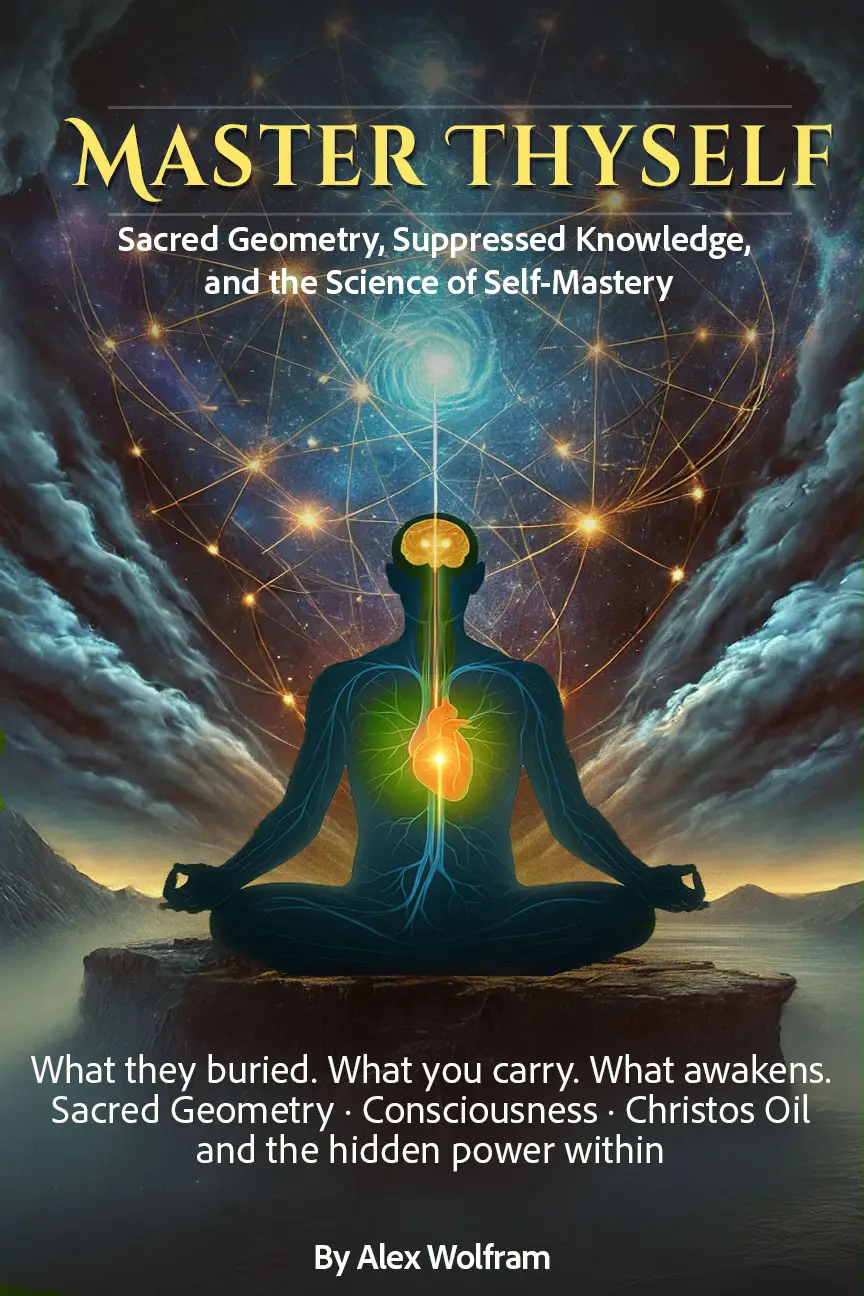
The Buried Record.
The Dolores Cannon material appears in Master Thyself in the context of what every contemplative tradition independently reports, what suppressed history points at, and what modern consciousness research is approaching from the other side. Cross-referenced through six traditions.
What Survives Scrutiny
A serious investigator has to address the obvious objections to the Cannon corpus. Three of them deserve careful treatment.
- Suggestibility of hypnotized subjects. Standard hypnotic suggestion can produce confident false memories. Studies on hypnotic suggestibility are robust. Cannon was aware of this and tried to design QHHT to minimize leading questions. The transcripts show varying degrees of success. Some sessions clearly include leading questions. Other sessions show the client generating material the practitioner could not have anticipated.
- Confabulation. The subconscious mind is a story-generating engine. Hypnotized subjects can produce coherent narratives that have no relationship to external reality. The phenomenon is well-documented. Cannon's response was that the convergence across independent sessions is harder to explain on the confabulation theory. Multiple subjects generating the same confabulation independently requires some additional explanation.
- Bias in client selection. Cannon's clients self-selected by seeking her services. They were already disposed to certain views. The convergence might reflect this selection rather than an underlying truth. The strongest version of this objection has to account for clients who came in skeptical and produced material consistent with the convergence anyway.
What survives careful scrutiny is the consistency of the corpus and the unexplained convergences. The conservative reading is that there is a deep structural pattern in human consciousness that, when accessed in deep trance, produces similar material across subjects. This is a smaller claim than Cannon's bolder reading (that the Subconscious is accessing actual non-physical realities), but it is still a significant claim. Mainstream psychology has not seriously engaged with the corpus to test either reading.
The most honest position: the data is real, the conservative explanations handle some of it, and the harder cases remain. The work merits engagement, not dismissal. The pattern requires explanation regardless of which reading turns out to be correct.
What Critics Get Right and Wrong
A serious engagement with Dolores Cannon's work requires taking the skeptical position seriously. The strongest critiques come in three forms, each with a legitimate kernel and each with limits worth naming directly.
- "The sessions are cryptomnesia." The critic argues that subjects under hypnosis are not recovering past lives but stitching together fragments of books, films, and forgotten media they consumed earlier. This is a real phenomenon and Cannon herself screened for it. The counter is that cryptomnesia explains some sessions but cannot explain the convergent themes across thousands of subjects with no shared media exposure, including subjects who confidently reported details they later researched and verified independently.
- "Cannon was leading the subjects." The critic argues that the questions a hypnotist asks shape the answers. This is partly true; question framing always biases responses. The counter is that Cannon's transcripts are publicly available and the questioning is largely open. When she did ask leading questions, the subjects regularly contradicted her. The transcripts show subjects correcting Cannon, refusing to go in the direction she pointed, and producing information she did not expect.
- "The convergent themes are confirmation bias." The critic argues that Cannon noticed the themes that fit her framework and ignored the ones that did not. This is the most legitimate critique. We cannot independently verify which sessions were included or excluded from her published synthesis. The counter is that the methodology, while not blind randomized, was unusually large-scale for the genre, and many of the published transcripts include material that was uncomfortable for Cannon's stated views.
A fair reading is that Dolores Cannon's work does not constitute scientific proof of anything, and she would have agreed. What it does constitute is an unusually large, unusually disciplined database of hypnotic regression sessions whose convergent patterns deserve explanation. The skeptic and the believer can both work with that.
What Recurred Across Forty Years
Cannon recorded thousands of QHHT sessions between the 1960s and her death in 2014. The themes that recurred across that volume of sessions, with subjects from different countries, ages, religions, and educational backgrounds, are the data worth examining. Some convergences were predictable. Others were not.
- The continuity of personality across lives. Subjects consistently reported that the core character of who they are persists across incarnations, with the surface personality being shaped by each lifetime's circumstances. The same essence in different costumes.
- The non-linear nature of time after death. Subjects described the between-life state as not bounded by chronological time. Multiple incarnations could be "running" in what felt like the same eternal moment from outside. This is consistent with reports from near-death experience literature but emerged independently in Cannon's work.
- The agreement on the nature of the lower world. Subjects, regardless of religious background, frequently described the physical world as a school, a classroom, or a training ground. The vocabulary varied; the structural claim was nearly identical. Earth life is for learning specific lessons that cannot be learned in the unbounded state.
- The presence of guides or higher selves. Subjects accessed what Cannon called the "Subconscious" or "Higher Self," a perspective that knew things the conscious personality did not. Sessions consistently produced information from this perspective that the subject could not have known by ordinary means. Sometimes this information was verifiable; sometimes it was not.
- The reluctance of the higher self to override free will. Subjects reported that the higher perspective declined to give specific predictions or to override their conscious choices. Information was offered; the agency stayed with the conscious self. This pattern is striking because it cuts against what a fraudulent or wish-fulfilling channeling source would produce.
None of this proves a metaphysical claim. What it does, with unusual force given the volume of the data, is establish that something is producing convergent reports from people who did not coordinate, who did not share media, and who often had no prior interest in past-life regression before walking into the session. Whatever that something is, it deserves to be examined rather than dismissed.
The full case, the documented sources, and the chapter-level analysis are covered in the book: Redacted, Chapter 18.
Master Thyself, Chapter 18 Read Recycled Into the Same Cage →Frequently Asked Questions
Who was Dolores Cannon?
An American hypnotherapist (1931 to 2014) who spent forty-five years developing and refining a deep-trance hypnosis technique she called Quantum Healing Hypnosis Technique (QHHT). She published seventeen books based on thousands of sessions, exploring past lives, consciousness, and the suppressed history of humanity. She founded Ozark Mountain Publishing and trained a worldwide network of QHHT practitioners.
What is Quantum Healing Hypnosis Technique?
A specific hypnosis method developed by Cannon to access the somnambulistic depth of trance, the deepest level of hypnosis. The technique includes a structured sequence of questions for past-life regression, body scanning for healing, and direct conversation with what Cannon called the Subconscious about deeper questions. Sessions are recorded and given to the client, since the client typically does not consciously remember the session content.
Did Dolores Cannon prove reincarnation?
No. Her work is suggestive but not conclusive. Past-life regression is not accepted as evidence of reincarnation by mainstream science, which treats the reports as the product of suggestion, confabulation, and dramatic memory construction. Cannon's argument was that the consistency of reports across thousands of independent sessions requires more explanation than the conventional accounts provide. The question remains open.
What are the Three Waves of Volunteers?
Cannon's late framework, drawn from many client sessions, that proposes three distinct waves of souls who volunteered to incarnate on Earth during this period specifically to help with a planetary transition. The first wave is older, the third wave is the youngest. Each wave has characteristic traits, life experiences, and challenges. The framework is detailed in her 2011 book Three Waves of Volunteers and the New Earth.
How does Dolores Cannon's work relate to the Law of One?
The cosmologies overlap significantly despite Cannon's clients generally not having read the Law of One. Both materials describe a multi-density consciousness structure, a choice between service to others and service to self, and an evolutionary trajectory that ends in return to source. The convergence between two independent channels is part of why both materials are taken seriously by people who have engaged with them carefully.
Is Dolores Cannon's work credible?
Credibility is a function of what claims are being evaluated and what evidence is required. As a documented body of consistent reports across thousands of independent sessions, the corpus is credible as data. As proof of the metaphysical claims it describes (reincarnation, non-physical intelligences, suppressed history), the corpus is suggestive rather than conclusive. Engagement is more useful than dismissal. The honest position is that the work merits investigation, even by skeptics.
The Buried Record, Recovered.
The Dolores Cannon corpus integrated with the contemplative traditions it converges with, the suppressed history it points toward, and the modern consciousness research approaching from the other side. Cross-referenced through six traditions.
Get Your Copy on Amazon