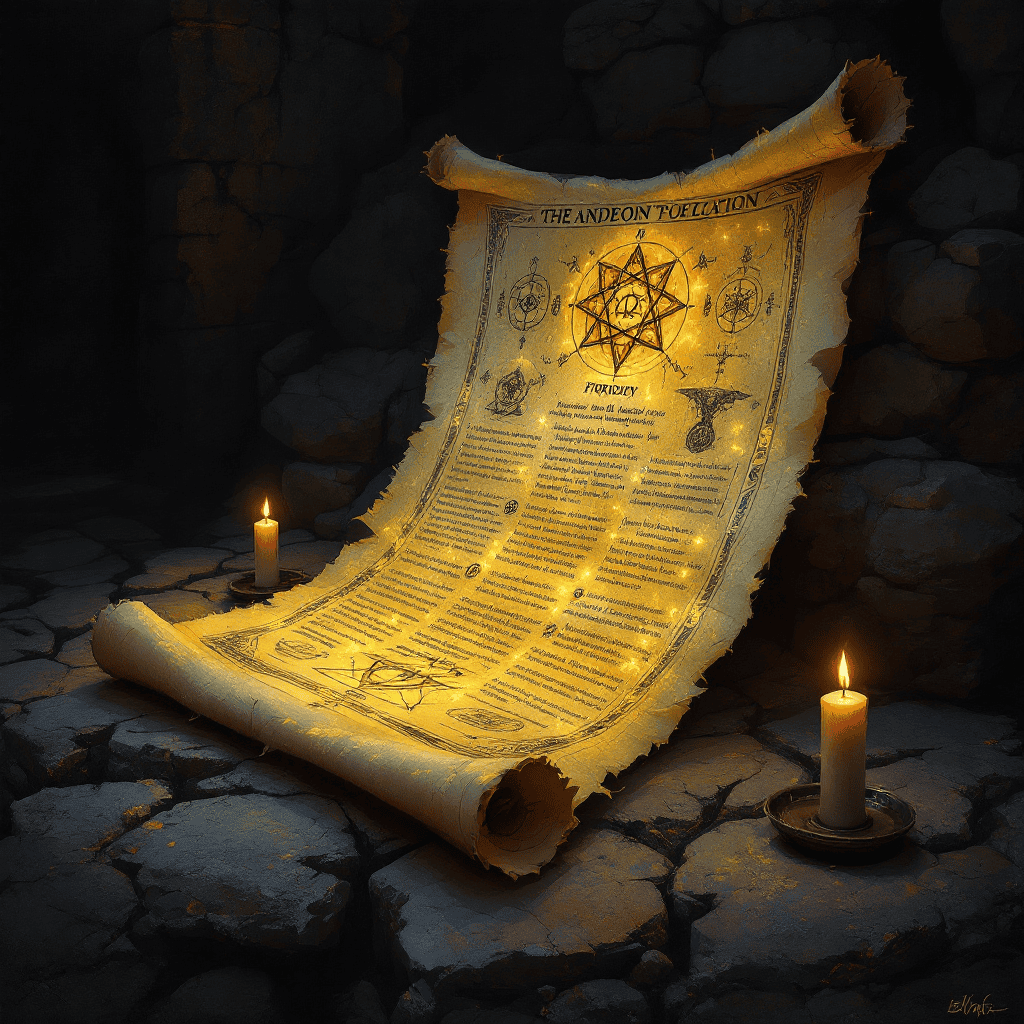
Forbidden knowledge meaning runs deeper than most realize. It does not refer to dark magic or dangerous secrets meant to corrupt the soul. It describes the teachings that grant direct access to the divine without an intermediary. These are the practices, symbols, and mechanisms that were systematically suppressed because they threatened centralized authority. When people can commune directly with Source, they no longer need priests, councils, or institutions to translate truth for them. That is the real reason certain knowledge was buried.
The word forbidden carries weight. It implies danger, transgression, punishment. But what if the danger was never to the seeker? What if the threat was always to the system that required your dependence? Throughout history, the most empowering teachings were not destroyed outright. They were inverted, demonized, or hidden so thoroughly that even the mention of them triggered fear. The forbidden became a label applied not to evil, but to sovereignty.
This article traces what forbidden knowledge actually means, why it was suppressed, who suppressed it, and what those teachings contained. The pattern repeats across every major civilization: knowledge that liberates is reframed as knowledge that damns. The serpent becomes Satan. The inner temple becomes heresy. The path inward becomes the road to hell. Once you see the inversion, you cannot unsee it.
What Forbidden Knowledge Actually Means
Forbidden knowledge is not a single teaching or practice. It is a category of understanding that operates outside sanctioned frameworks. In ancient cultures, mystery schools preserved teachings accessible only through initiation. Students proved readiness through discipline, silence, and mastery of lower impulses before receiving higher instruction. This was not elitism. It was protection. Knowledge without readiness can destabilize the unprepared mind.
The core of early Christian mysticism centered on gnosis, direct inner knowing of the divine. Gnosis required no scripture, no priest, no ritual beyond stillness and presence. When institutional Christianity rose to power, this became unacceptable. The Council of Nicaea in 325 AD standardized doctrine and marginalized direct experience. Gnosis was rebranded as heresy. The Gnostic Gospels were hidden or destroyed. What survived did so underground, passed hand to hand by those willing to risk everything to preserve it.
The same suppression occurred across traditions. In Kabbalah, the deepest teachings were restricted to married men over forty who had mastered Torah. In Sufism, the inner path was veiled in poetry and parable. In Vedic lineages, the highest knowledge was oral, transmitted only after years of service. The pattern is consistent: the teachings that awaken the soul are always guarded, always restricted, and always positioned beyond the reach of casual seekers.
Modern culture inverts this entirely. Today, forbidden knowledge is treated as clickbait, conspiracy theory, or New Age fantasy. The term has been weaponized to make serious inquiry look foolish. Mention sacred geometry, energy healing, or the pineal gland in most rooms and you will be dismissed. That dismissal is not accidental. It is the continuation of a suppression campaign that began centuries ago and continues in subtler forms today.
The Mechanisms That Were Hidden
What exactly was hidden? The short answer: anything that taught mastery over your own biology, perception, and energetic state. These teachings did not require belief. They required practice. And they worked. That made them dangerous to systems built on dependency.
One of the oldest suppressed practices involves the alignment of breath, focus, and spinal energy. Yogic traditions call it Kundalini. Kabbalists describe it as the ascent through the Tree of Life. Hermetic texts reference the same pattern encoded in alchemical symbols. The mechanism is consistent: purify the body, still the mind, focus awareness, and allow dormant energy to rise through the central channel of the spine. When that energy reaches the brain, perception expands. The veil thins. Direct knowing becomes possible.
Christianity once preserved this teaching in its esoteric layer. The resurrection was not only an event but a process: the death of the ego and the rising of the Christed self. Early mystics understood this. Origen, Clement of Alexandria, and the Desert Fathers taught inner transformation as the goal of spiritual life. By the medieval period, that layer had been buried. Resurrection became a future event dependent on external salvation. The inner mechanism was lost to all but a hidden few.
Another suppressed truth involves the role of the pineal gland. Ancient Egyptians called it the seat of the soul. Descartes identified it as the connection between mind and body. Modern science dismisses it as a vestigial light sensor. Yet across mystical traditions, the pineal is described as the gateway to higher perception. REDACTED, READ CHAPTER 21 of Master Thyself details the biological mechanism through which this gland activates during specific practices. The protocol is precise. The results are repeatable. And the knowledge was systematically removed from public view.
Sacred geometry falls into the same category. The patterns underlying physical reality were encoded into temple architecture, cathedral design, and initiatory rites. These were not decorations. They were functional. Certain proportions resonate with human consciousness in measurable ways. The Flower of Life, the Vesica Piscis, the Golden Ratio: each carries information. Each was removed from mainstream education and relegated to occult studies. The language your own biology speaks was taken from you and called mysticism.
Why the Suppression Happened
Control requires dependency. If people can heal themselves, they do not need doctors. If they can access God directly, they do not need priests. If they can think clearly, they do not need authorities to interpret reality for them. Every suppressed teaching shares one feature: it grants autonomy.
The institutional Church understood this from the beginning. Constantine did not convert to Christianity because he found God. He converted because he needed a unified empire. The Edict of Milan in 313 AD legalized Christianity. The Council of Nicaea in 325 AD standardized it. Within a generation, the most diverse spiritual movement in the ancient world had been compressed into a single state-approved doctrine. Deviation was heresy. Heresy was punishable by death.
The same logic governed every text that was removed from the canon. The Gospel of Thomas emphasized inner knowing. The Gospel of Mary elevated a female voice. The Secret Book of John described the soul’s journey without requiring church mediation. Each one reduced institutional necessity. Each one was labeled dangerous and buried. What survived was a version of Christianity that placed the priest between you and God, the institution between you and salvation, and obedience between you and grace.
This was not unique to Christianity. Every empire that rose to dominance followed the same playbook. The Roman Empire absorbed the mystery schools and repackaged their symbols under state control. The British Empire colonized indigenous cultures and burned their sacred texts. The modern technocratic state surveils, censors, and marginalizes any teaching that cannot be monetized or controlled. The forbidden becomes whatever threatens the current power structure.
Fear was the primary tool. Associating inner practices with demonic influence ensured that even curious seekers would avoid them. The serpent, once a symbol of healing and wisdom across every ancient culture, was recast as Satan. Kundalini, the sacred fire of ascent, became possession. The third eye became witchcraft. Forbidden knowledge was reframed as a trap set by the adversary, and generations of believers policed themselves without the institution ever needing to intervene.
The Inversion of Sacred Symbols
Forbidden knowledge meaning extends into the realm of symbols. A symbol that points to liberation must be neutralized. The most effective method is inversion: take the symbol, reverse its meaning, and broadcast the corruption until the original is forgotten.
The caduceus, two serpents spiraling around a staff, is one of the clearest examples. In Hermetic tradition, it represents the balance of opposing forces and the ascent of awareness through the central channel. In Ayurvedic and yogic systems, the same image describes Ida and Pingala, the lunar and solar currents that spiral up the spine. The staff is the spinal column. The serpents are energetic pathways. The wings at the top represent expanded consciousness once the energy reaches the brain. This was sacred anatomy, not mythology.
Yet the serpent was demonized. By the medieval period, the very image that once taught awakening had become associated with temptation and fall. The symbol that represented healing was inverted into a warning. Hospitals still use the caduceus today, unaware that they are displaying a map of human energetic ascent while operating from a purely material medical model. The irony is complete.
Another example is the pentagram. Originally a symbol of the human body in balance, arms and legs extended with the head as the fifth point, it represented mastery over the elements and integration of spirit into matter. Pythagoras used it as a sign of health and mathematical harmony. Early Christians adopted it to represent the five wounds of Christ. By the 19th century, occultists had inverted it, and by the 20th, popular culture associated it exclusively with Satanism. The symbol of embodied divinity became the mark of its opposite.
The pattern repeats with nearly every sacred image. The all-seeing eye, once the awakened third eye of inner vision, became the surveillance symbol of external control. The cross, once representing the meeting of heaven and earth within the human form, became an instrument of torture and guilt. Even the word Lucifer, meaning light-bearer, was turned into a name for the devil. The tools that once guided seekers toward illumination were repurposed to keep them in fear.
What the Teachings Contained
The suppressed doctrines and hidden teachings share common threads. They describe humanity not as fallen, but as forgetful. Not as sinful, but as asleep. Not as dependent on external salvation, but as capable of inner transformation. These teachings do not reject the material world. They integrate it. The body is not a prison. It is the temple. The world is not evil. It is the training ground.
One core teaching involves vibration. Everything in existence, matter, thought, emotion, carries a frequency. Consciousness is not separate from the physical. It is the organizing principle within it. Ancient traditions taught methods to raise personal frequency through sound, breath, focus, and ethical alignment. The Solfeggio frequencies, Gregorian chants, Sanskrit mantras, and Hebrew prayers were all designed as vibrational tools. REDACTED, READ CHAPTER 10 of the source text maps how specific tones were used in temple settings to induce states of expanded awareness.
Another suppressed principle is reincarnation. Early Christian communities taught it openly. Origen wrote extensively about the soul’s pre-existence and multiple lifetimes. The concept was condemned at the Second Council of Constantinople in 553 AD, not because it was heretical to scripture, but because it was inconvenient to control. A soul that returns has time to learn, grow, and eventually transcend the need for institutional guidance. A soul with one chance must obey or face eternal punishment. The doctrine of one life, one judgment, one afterlife serves authority far better than the cyclical view.
The divine feminine represents another massive suppression. Sophia, the Gnostic embodiment of wisdom, was erased from Christian theology. Mary Magdalene, described in early texts as a teacher and spiritual equal to the apostles, was rebranded as a repentant sinner. Goddess worship, which predated monotheism by millennia, was systematically demonized. The result was a theology that elevated the masculine principle while casting the feminine as either subordinate or dangerous. Balance was replaced with hierarchy. Wisdom was replaced with law. The inner knowing associated with the feminine was buried under external commandment.
Each of these teachings pointed in the same direction: sovereignty. Not as rebellion, but as alignment with the divine design already present within the individual. The forbidden was never about darkness. It was always about light.
Who Guarded the Gates
The suppression was not accidental. It required coordination, enforcement, and centuries of sustained effort. The Catholic Church functioned as the primary gatekeeper for over a millennium. Through councils, inquisitions, and the monopoly on scripture, it controlled what could be taught, believed, or even discussed. Dissent was heresy. Heresy was death.
But the Church was not alone. Secret societies, from the Knights Templar to Freemasonry, inherited fragments of the original teachings. Some preserved them faithfully. Others weaponized them. The distinction matters. A teaching used to awaken is not the same teaching used to manipulate. The same symbols that once pointed toward God can be inverted to serve ego, empire, or control. Not all who carried the knowledge honored it.
Modern gatekeepers wear different uniforms. Academic institutions dismiss anything that cannot be peer-reviewed within materialist frameworks. Media platforms censor content that challenges approved narratives. Pharmaceutical and agricultural industries suppress healing modalities that threaten profit models. The mechanisms have evolved, but the function remains the same: keep the population dependent, distracted, and unaware of the tools that grant autonomy.
The deeper irony is that many gatekeepers do not realize they are gatekeepers. They believe they are protecting truth, upholding standards, or serving the public good. The system is self-sustaining. Once a worldview is installed early enough and reinforced consistently, it becomes invisible. The bars of the cage feel like the walls of reality itself.
The Path Forward
Forbidden knowledge meaning has shifted in the digital age. Information is more accessible than ever, yet discernment has collapsed. The signal-to-noise ratio is so distorted that most seekers drown in content without ever finding clarity. Forums, videos, and blog posts offer fragments, but rarely the full map. The architecture of distraction is more sophisticated than any inquisition.
Reclaiming what was hidden requires more than research. It requires practice. The teachings were never meant to be believed. They were meant to be lived. You cannot think your way into gnosis. You cannot read your way into sovereignty. The knowing comes through direct experience, through the body, through the alignment of will and awareness in a sustained discipline that most are unwilling to maintain.
This is where the complete framework in Master Thyself becomes essential. The book does not speculate. It synthesizes. It does not theorize. It maps the mechanisms that were removed from public view and demonstrates how they operate within your own biology. The chapters on the sacred secretion, the role of cerebrospinal fluid and the anointing process, and the alignment of celestial cycles with human chemistry provide what centuries of suppression tried to erase: the instruction manual for awakening that was always meant to be yours.
The forbidden was never forbidden by God. It was forbidden by those who could not afford your liberation. The knowledge exists. It has always existed. The question is whether you are ready to stop asking permission to remember what you already are.
Why They Called It Dangerous
The final layer of forbidden knowledge meaning involves recognizing why the label stuck. Dangerous implies harm. But to whom? Not to the seeker. To the system. A population that knows how to heal itself, think for itself, and access the divine without intermediaries is ungovernable. Not rebellious. Ungovernable. There is a difference.
Rebellion still operates within the system. It fights against authority, which means it acknowledges authority as real. Sovereignty does not fight. It simply withdraws consent. It stops feeding the mechanisms that require dependency. When enough individuals reclaim inner authority, the outer structures lose their foundation. That is the real danger. Not to souls. To empires.
The teachings were called forbidden because they dissolve the illusion that you need saving by someone else. They reveal that the kingdom of heaven is within, that you are the temple, that the resurrection is a process you can undergo in this lifetime. Every verse the Church left in scripture that points inward was a calculated risk. They hoped you would never notice. They hoped the outer trappings, ritual, hierarchy, guilt, would keep your attention directed anywhere but the one place the truth was always waiting.
Forbidden knowledge is not hidden in a vault. It is hidden in plain sight, encoded in your biology, whispered in your intuition, and waiting in the stillness you have been trained to avoid. The gate was never locked. You were simply taught not to look for it.
The Real Meaning
Forbidden knowledge meaning is this: the teachings that were removed from your inheritance because they made you free. Not free in the political sense. Free in the spiritual sense. Free from fear, from dependency, from the belief that you are anything less than a spark of the divine temporarily housed in matter.
Every suppressed text, every inverted symbol, every demonized practice points back to the same truth. You were never separate from Source. You were never fallen beyond repair. You were never dependent on external salvation. The system that taught you otherwise did so because your awakening was the one outcome it could not survive.
The knowledge is no longer forbidden. It is available. The question is whether you will take it seriously enough to do the work. Reading about the path is not the same as walking it. Understanding the teaching is not the same as embodying it. The gate opens only from the inside. And it opens only when you are ready to leave everything you thought you knew on the other side.
Forbidden knowledge was never about what you were not allowed to know. It was always about what you were not supposed to remember. The remembering has already begun. The only question left is how far you are willing to go.