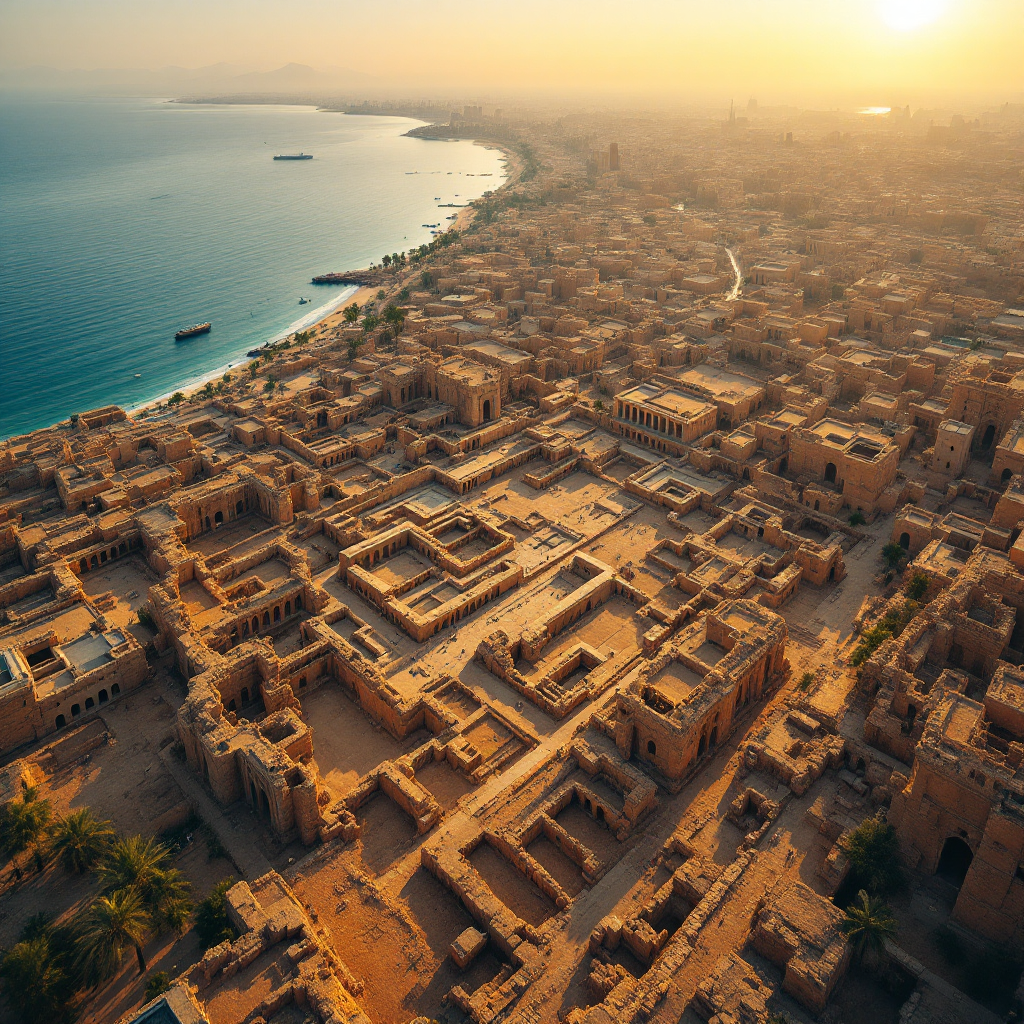
When did the Library of Alexandria burn? The question assumes a single catastrophic event, but the truth is far more complex and deliberate. The destruction of the ancient world’s greatest repository of knowledge occurred not in one dramatic blaze but across multiple centuries, through a series of fires, sieges, and systematic erasures spanning from 48 BCE to possibly as late as 642 CE. Each incident stripped away layers of human understanding, mathematical precision, astronomical maps, and initiatory texts that might have altered the course of civilization.
The answer matters because what burned wasn’t just papyrus. It was the chain of custody. The mystery schools of Egypt, Greece, and the Near East had preserved knowledge encoded in symbol, geometry, and myth for millennia. Suppression patterns across history show that when institutional power feels threatened by decentralized knowledge, the response is predictable: erase the source, rewrite the narrative, and control what remains.
The First Burn: Julius Caesar and the Accidental Inferno of 48 BCE
The earliest documented destruction came during Julius Caesar’s military campaign in Alexandria. In 48 BCE, Caesar found himself besieged in the harbor district. To prevent enemy ships from being used against him, he ordered his men to set the docked fleet ablaze. The fire spread beyond his control, leaping from the harbor to nearby structures. Ancient historians including Plutarch, Dio Cassius, and Seneca the Younger recorded that the flames reached the warehouses near the docks, where scrolls awaiting export were stored.
Whether the main Library building itself burned in this incident remains debated. Some scholars argue that only the warehouse annexes were destroyed, containing perhaps 40,000 scrolls. Others suggest the Great Library’s collections were untouched, as the main complex sat further inland in the Royal Quarter. What’s certain is that significant volumes of texts were lost to Caesar’s fire, and the event marked the beginning of the Library’s long decline.
The symbolic weight cannot be ignored. Rome, the rising empire, accidentally igniting the intellectual heart of the Hellenistic world. Whether by negligence or hidden intent, the result was the same: knowledge reduced to ash, and the chain of transmission severed at a critical link.
The Slow Erosion: Imperial Neglect and Christian Redesign
After Caesar’s fire, the Library of Alexandria limped forward under Roman rule, but its golden age had ended. Successive emperors showed little interest in preserving what had made Alexandria the intellectual capital of the ancient world. By the 3rd century CE, the city had suffered through civil wars, plagues, and economic collapse. The imperial budget for acquiring new scrolls dried up. Scholars scattered. The institution that once employed hundreds of scribes and translators became a shadow.
Then came the rise of Christianity as state religion under Constantine in the 4th century. As explored throughout the framework of institutional control, when a new orthodoxy seizes power, it doesn’t merely replace the old beliefs. It burns them. Pagan temples were converted into churches or dismantled for building materials. Texts deemed heretical were targeted for destruction. The Serapeum, a daughter library and temple complex in Alexandria, housed an estimated 10 percent of the original Library’s collection by this period.
In 391 CE, the Christian Emperor Theodosius I issued edicts banning pagan worship. Patriarch Theophilus of Alexandria led a campaign to destroy pagan temples across the city. The Serapeum was sacked. Whether the scrolls inside were deliberately burned, scattered, or simply left to rot is lost to history, but the result was another catastrophic loss. The daughter library, and whatever remained of the ancient knowledge it safeguarded, was gone.
This wasn’t accidental neglect. It was theological housecleaning. Anything that contradicted the emerging Christian narrative, Gnostic gospels, Hermetic philosophy, astrological treatises, alchemical texts, was systematically erased. The tools of inner knowing were reframed as tools of damnation.
The Hypatia Incident: When Philosophy Became Heresy
By 415 CE, whatever remained of Alexandria’s intellectual tradition was embodied in individuals rather than institutions. One of the last was Hypatia, a mathematician, astronomer, and Neoplatonist philosopher who taught publicly in Alexandria. She was widely respected, consulted by civic leaders, and represented the continuity of classical learning in a city increasingly dominated by Christian authority.
Hypatia was murdered by a Christian mob, reportedly incited by Cyril, the Patriarch of Alexandria. She was dragged from her chariot, stripped, and killed with shards of pottery in what ancient sources describe as ritualized violence. Her body was dismembered and burned. Her crime? Teaching philosophy outside the bounds of Church approval. Her death marked the end of Alexandria as a center of free intellectual inquiry.
No scrolls burned that day, but the message was clear. Knowledge that could not be controlled would not be tolerated. The chain wasn’t just broken. It was publicly executed.
When Did the Library of Alexandria Burn? The Muslim Conquest Controversy
A later tradition, recorded centuries after the fact, claims that the final destruction came in 642 CE during the Muslim conquest of Egypt. According to this account, the Arab general Amr ibn al-As asked Caliph Umar what to do with the Library’s remaining scrolls. Umar allegedly replied that if the books agreed with the Quran, they were unnecessary, and if they contradicted it, they were heretical. Either way, they should be burned. The scrolls were reportedly used as fuel to heat the city’s bathhouses for six months.
Modern historians widely dismiss this story as later propaganda, likely fabricated during the Crusades to paint Muslims as enemies of learning. No contemporary sources mention the event, and by 642 CE, most scholars agree the Library no longer existed as a functioning institution. Whatever scrolls remained had likely been destroyed, scattered, or absorbed into private collections centuries earlier.
But the story persists because it fits a pattern. Every empire writes its enemies as barbarians. Every conqueror rewrites the narrative to justify what was taken. Whether the story is true or fabricated, it reveals the same underlying mechanism: when knowledge threatens power, power destroys knowledge and blames someone else.
What Was Really Lost When the Library Burned
The question of when did the Library of Alexandria burn assumes we’re asking about dates and emperors. The deeper question is what burned. The Library wasn’t just a collection of scrolls. It was the repository of pre-Christian cosmology, sacred geometry encoded in temple design, astronomical records stretching back millennia, medical texts from Egypt and India, and initiatory teachings from the mystery schools.
Eratosthenes calculated the Earth’s circumference to within 1 percent accuracy in the 3rd century BCE using geometry and shadow measurements, a feat that wouldn’t be matched again for over a thousand years. Aristarchus proposed a heliocentric model of the solar system 1,800 years before Copernicus. Heron of Alexandria built steam-powered devices and automated temple doors. The accumulated wisdom of Babylon, Persia, Greece, and Egypt converged in this single city, cross-pollinating into insights that would take Europe another millennium to rediscover.
Much of what survived did so by accident. Arabic scholars in Baghdad preserved Greek philosophy during Europe’s Dark Ages. A single copied manuscript of Archimedes’ work on calculus survived as a palimpsest, scraped and overwritten with Christian prayers, only rediscovered in 1906. Timing, cycles, and the sacred calendar systems encoded in now-lost Alexandrian texts had to be reverse-engineered from fragments centuries later.
What didn’t survive were the mystery school teachings, the texts too dangerous to copy, the knowledge reserved for initiates. Those burned first. Not by accident, but by design.
The Architecture of Forgetting
Understanding when did the Library of Alexandria burn requires seeing the pattern behind the dates. It wasn’t one fire. It was a coordinated dismantling across centuries, each phase removing another layer of access to pre-Christian knowledge. The mechanism repeated because it works.
First, you destabilize the institution through war or neglect. Then you reframe the knowledge as heretical or unnecessary. Then you destroy the physical texts while persecuting anyone who tries to preserve them. Finally, you rewrite history to make the destruction seem inevitable, even noble. Rome brought civilization. Christianity brought salvation. Islam brought the Quran. And in each version, the burning of the old knowledge becomes proof that it wasn’t worth keeping.
The same blueprint appears across history. The Spanish burned Mayan codices in the 16th century, erasing an entire cosmology. The Church suppressed Gnostic gospels and labeled Hermetic texts as witchcraft. Colonial powers destroyed indigenous knowledge systems on every continent, always with the same justification: we are saving you from yourselves.
When you control what people can know, you control what they can become. An awakened population doesn’t need saviors, priests, or emperors. They need only the tools to remember what they already are. And those tools were in Alexandria, encoded in geometry, astronomy, and myth, until the fires came.
The Hidden Texts That Escaped the Flames
Not everything burned. Some texts escaped because they were copied and smuggled out before the final collapse. The Corpus Hermeticum, attributed to Hermes Trismegistus, survived in fragmentary form and resurfaced in Renaissance Italy, igniting a revival of Hermetic philosophy. The Emerald Tablet, with its axiom “as above, so below,” encoded the principles of sacred geometry and cosmic correspondence in a handful of lines that no fire could erase from human memory.
Other works survived as references in later texts. We know Aristarchus proposed heliocentrism because Archimedes mentioned it. We know Eratosthenes measured the Earth because later geographers cited his work. The chain of custody was broken, but fragments remained, scattered across cultures and centuries, waiting to be reassembled.
The real question isn’t what survived by chance, but what was deliberately hidden. Initiatory knowledge was never written down in plain language. It was encoded in symbol, passed orally from teacher to student, embedded in temple architecture where those with eyes to see could read it. The fire could destroy papyrus, but it couldn’t destroy the signal if enough initiates carried it forward. Chapter 21 of Master Thyself traces how that transmission continued through medieval alchemists, Renaissance Hermeticists, and modern researchers who recognize the same patterns encoded in biology, geometry, and consciousness itself.
Why the Burning Still Matters
When did the Library of Alexandria burn? The historical answer spans 48 BCE to 642 CE, a slow extinguishing rather than a single blaze. But the symbolic answer is still unfolding. Every time a government bans books, every time a platform censors speech, every time an institution declares certain questions off-limits, the same fire burns.
The Library’s destruction wasn’t just about scrolls. It was about severing humanity’s connection to a older, broader understanding of reality. Before the empires consolidated control, knowledge moved freely across cultures. Egyptian priests taught Greek philosophers. Babylonian astronomers shared star charts with Indian mathematicians. The Library was the node where those streams converged.
After the burning, knowledge became fragmented, gatekept, and weaponized. The mystery schools went underground. The sacred sciences were rebranded as superstition. And the average person was cut off from the tools their ancestors used to navigate both the inner and outer cosmos.
We live in the aftermath of that severance. The questions the Library’s scholars asked, about consciousness, cosmology, and the nature of reality, are the same questions this work explores. The answers they found, encoded in geometry and myth, are the same answers being rediscovered now, not through institution but through direct inquiry.
The fire never fully succeeded. It destroyed the scrolls, but the knowledge encoded in those scrolls wasn’t dependent on papyrus. It was written into the architecture of reality itself, accessible to anyone willing to look.
The Lessons Encoded in Ash
If you want to control a population, you don’t need to burn every book. You only need to burn the ones that teach people how to think for themselves. The Library of Alexandria didn’t fall because it was undefended. It fell because what it represented, open inquiry, cross-cultural synthesis, and the democratization of knowledge, was incompatible with empire.
Rome needed subjects, not philosophers. The Church needed believers, not mystics. Every power structure since has followed the same logic. Knowledge that empowers the individual is dangerous. Knowledge that requires an intermediary is safe.
The burning taught the elites a lesson they never forgot: don’t let the people gather their own knowledge. Don’t let them compare sources. Don’t let them see the patterns that connect Babylon to Egypt to Greece to India. Because once they see the pattern, they see the cage.
That’s why the question of when did the Library of Alexandria burn matters. Not because we need the exact date, but because we need to recognize the mechanism. The same forces that destroyed Alexandria are still operating, just with different tools. The scrolls are now servers. The fires are now algorithms. The gatekeepers are now platforms.
But the response is also the same. Preserve what you can. Share what you know. Encode the signal in forms that survive suppression. And remember that the most important knowledge was never written down in the first place. It lives in you, waiting to be remembered.