Nuclear Waste Recycling: The Fuel Hidden In Plain Sight
You were told nuclear waste was a 10,000 year problem. The truth: it is fuel.
The next generation of reactors does not store nuclear waste. It eats it. The technology has existed for decades. France uses it. Russia uses it. The United States deliberately walked away. Here is what was buried, and why.
The Lie We Inherited About Nuclear Energy
For fifty years, the public has been taught a single story about nuclear energy. The plants are dangerous. The waste lasts forever. The science is too risky. The cost is too high. Solar and wind will save us instead. Most people accept this without examining it, because it has been repeated by every news outlet, every political party, every classroom.
Almost none of it is true.
Nuclear is the cleanest, safest, most reliable source of power humanity has ever built. It produces less carbon per kilowatt hour than wind. It kills fewer people per terawatt hour than any other energy source on Earth, including solar. And the so-called waste problem is not a problem at all. It is a fuel reserve we were told not to use.
The "nuclear waste problem" was never really a problem. It was a fuel reserve we hadn't figured out how to use yet.
Lifecycle CO2 Of Every Power Source, Compared
Before the nuclear waste angle makes sense, it helps to see where nuclear stands against everything else. The number that matters is grams of carbon dioxide emitted per kilowatt hour of electricity delivered, measured across the entire lifecycle of the power source. This includes mining the raw materials, manufacturing the equipment, shipping and construction, decades of operation and maintenance, and eventual decommissioning and disposal. It is the fairest way to compare energy sources, because it captures the full environmental cost, not just what comes out of the smokestack during operation.
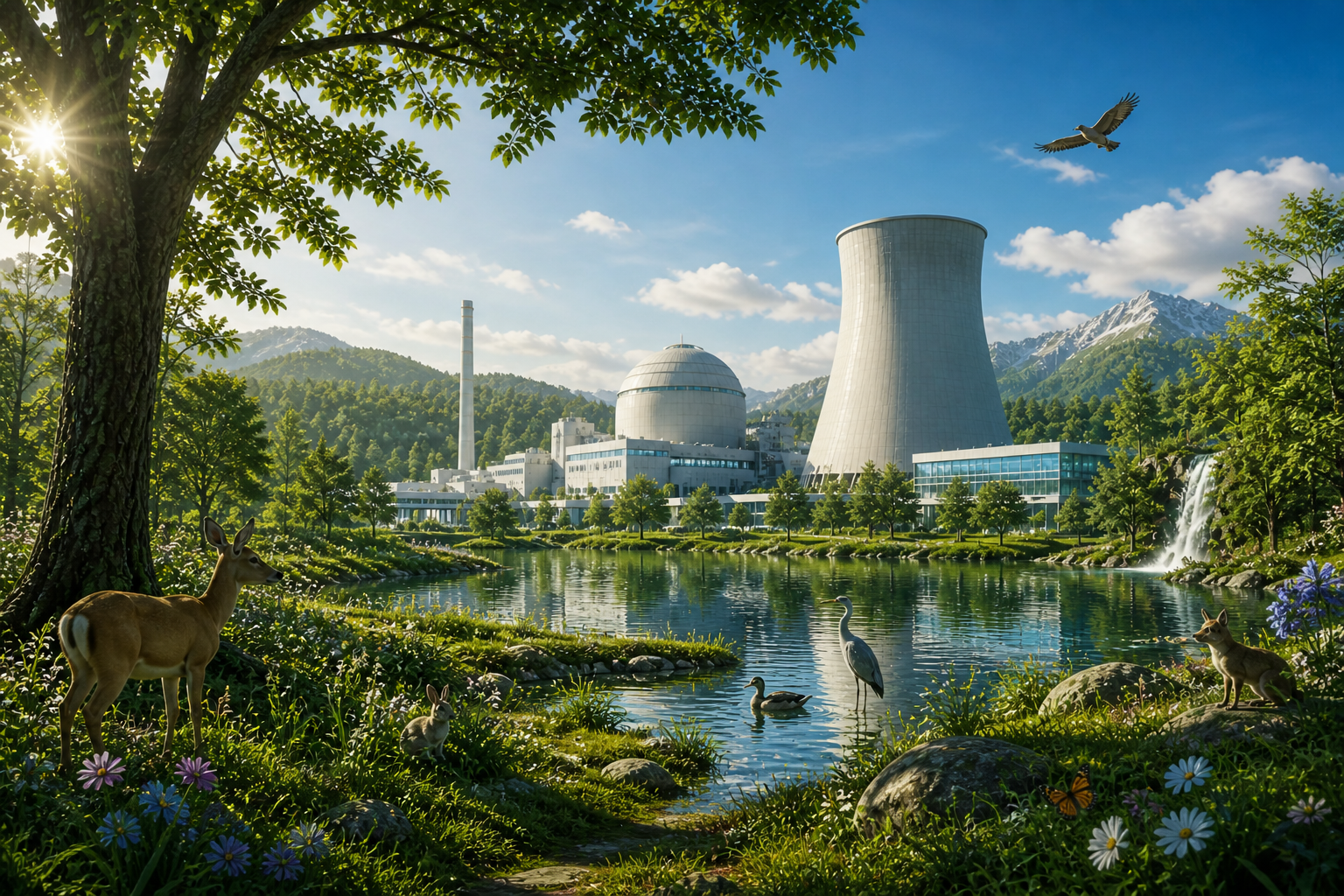
Clean nuclear power delivers more energy with less material, less land, and less carbon than any other source.
| Source | g CO2 / kWh | Firm?* |
|---|---|---|
| Nuclear | 4 to 12 | Yes |
| Hydro | 4 to 24 | Yes |
| Geothermal | 6 to 38 | Yes |
| Wind onshore | 50 to 100 firmed | No |
| Wind offshore | 60 to 120 firmed | No |
| Solar PV | 80 to 150 firmed | No |
| Biomass | 90 to 230 | Yes |
| Natural gas CC | 400 to 500 | Yes |
| Gas peaker | 550 to 700 | Yes |
| Oil | 700 to 900 | Yes |
| Coal modern | 750 to 900 | Yes |
| Coal older | 900 to 1,100 | Yes |
| Lignite | 1,000 to 1,300 | Yes |
*Firm = available on demand, 24/7, regardless of weather or time of day. Non-firm sources need backup (batteries, gas plants) to keep the grid stable.
Nuclear is roughly four times cleaner than utility solar, lower than onshore wind once grid firming is included, and seventy times cleaner than coal. The only sources that come close are hydro and geothermal, both of which are limited by geography. Nuclear is the only clean firm source that can be deployed anywhere.
Yet for half a century, we were told it was the dirty option. That is not science. That is narrative.
What Nuclear Waste Actually Is
When uranium fuel runs through a conventional light water reactor, only about three to five percent of its energy is extracted. The rest is locked inside the fuel rods. After three or four years, the rods are removed not because they are spent, but because fission products build up inside and slow the reaction. The fuel is removed, cooled in pools, and eventually moved to dry casks for storage.
That cask is what people call "nuclear waste." Inside is roughly ninety-five percent of the original uranium energy still untouched, plus plutonium and other actinides created during fission. It is the most energy dense material ever produced by human hands. And we bury it.
Why Doesn't The US Recycle Nuclear Waste?
The answer is policy, not science. In 1977, President Jimmy Carter signed an executive order banning commercial reprocessing of spent nuclear fuel in the United States. The stated reason was nonproliferation, the fear that recycling fuel would create plutonium that bad actors could divert into weapons. The fear was real. The decision was political. And it has cost the United States half a century of progress.
President Reagan rescinded the ban in 1981. But the damage was done. Industry had pivoted, supply chains had collapsed, regulatory pathways had ossified. No new commercial reprocessing facility has been built in the United States since. The country that invented nuclear power chose to bury its fuel instead of using it.
France Nuclear Reprocessing: The Path Not Taken
France made the opposite choice. The La Hague reprocessing facility on the Normandy coast has been recycling spent nuclear fuel since 1976. France generates roughly seventy percent of its electricity from nuclear power. It exports clean energy to Germany, Italy, and the United Kingdom. Its electricity prices are among the lowest in Western Europe. Its per capita carbon emissions are a fraction of Germany's.
Russia operates similar facilities at Mayak. Japan has built one at Rokkasho. The United Kingdom ran one at Sellafield until 2018. Every serious nuclear nation either reprocesses or has the capability to. The United States is the one country that chose to walk away from its own technology.
Roughly ninety thousand metric tons of spent nuclear fuel currently sits in casks at American reactor sites. That fuel contains enough untapped energy to power the United States for approximately one hundred years if burned in fast reactors. Instead, it is treated as a permanent disposal problem.
Fast Reactors And Molten Salt Reactors: The Reactors That Eat Waste
The technology to use that buried fuel already exists. It has existed for decades. Three reactor families can extract the remaining energy from spent fuel:
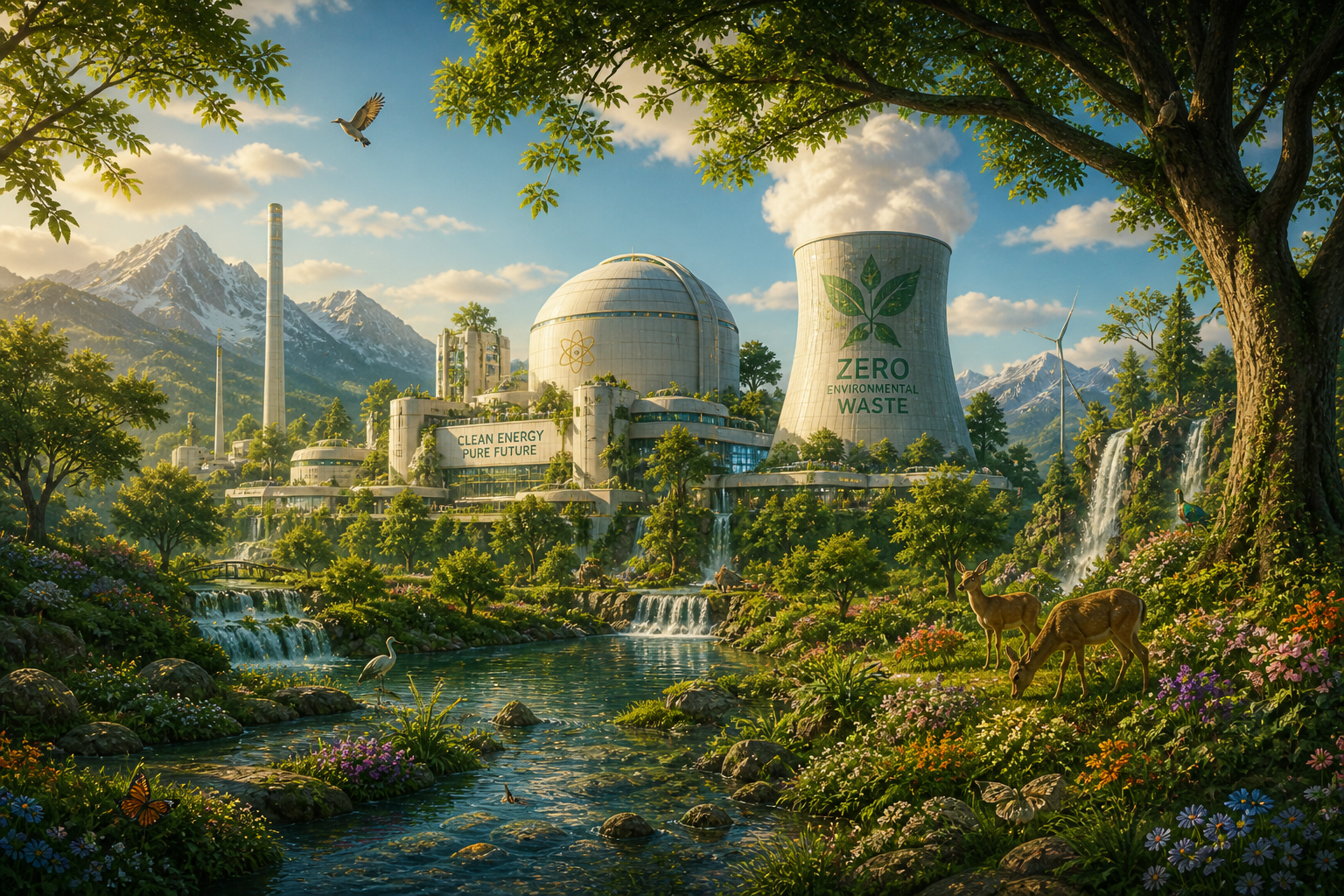
Advanced reactor designs can extract sixty to ninety percent more energy from uranium that current reactors leave behind as waste.
Fast Reactors
Fast reactors use sodium or lead as coolant instead of water. The faster neutrons inside these reactors can split heavier isotopes that water-cooled reactors cannot, including plutonium and the long-lived actinides that make spent fuel hazardous for thousands of years. A fast reactor can extract sixty to ninety percent more energy from uranium fuel than a conventional reactor, while reducing the volume and toxicity of the remaining waste by a factor of one hundred or more.
TerraPower, founded by Bill Gates, broke ground on its Natrium fast reactor in Wyoming in 2024. The Department of Energy selected it for its Reactor Pilot Program. Russia has operated commercial fast reactors at Beloyarsk for decades. China commissioned its CFR-600 in 2023. The technology is not theoretical. It is operational.
Molten Salt Reactors
Molten salt reactors dissolve fuel directly into a flowing salt mixture. They run at atmospheric pressure, cannot melt down because the fuel is already molten, and can use thorium as fuel instead of uranium. They can also burn existing spent fuel from light water reactors. Terrestrial Energy is targeting commercial deployment under the DOE pilot program. Copenhagen Atomics, Thorcon, and Kairos Power are among the companies racing to bring designs online.
Breeder Reactors
A breeder reactor produces more fuel than it consumes by converting non-fissile uranium-238 into fissile plutonium-239. The United States built and operated experimental breeders for decades. The Integral Fast Reactor program at Argonne National Laboratory was on the verge of commercialization in 1994 when it was canceled by the Clinton administration on political grounds. The technology was not flawed. The decision was.
The full case, the documented sources, and the chapter-level analysis are covered in the book: Redacted, Chapter 15.
Master Thyself, Chapter 15Read The Architecture of Control →
What Else Was Hidden From You?
If the truth about nuclear energy can be buried for fifty years in plain sight, what else has been quietly removed from public memory? Master Thyself traces the patterns across history, biology, geometry, and the systems built to keep you compliant.
Read the first chapters free. Decide for yourself.
The Spent Nuclear Fuel Reuse Renaissance Is Already Underway
For the first time in fifty years, the political and industrial wind has shifted. The 2025 executive orders on nuclear energy set a goal of expanding US capacity from one hundred gigawatts to four hundred gigawatts by 2050. The Department of Energy launched a Reactor Pilot Program racing to bring three advanced reactors to criticality by July 4, 2026. The Nuclear Regulatory Commission's new Part 53 licensing framework, effective April 29, 2026, is the first new reactor licensing rule in decades.
Microsoft, Amazon, Google, and Meta have all signed nuclear power purchase agreements to fuel their AI data centers. Three Mile Island Unit 1 is being restarted to power Microsoft's operations. The Palisades plant in Michigan is the first US reactor in history to come back from retirement. The world's largest battery manufacturer would not be powering AI clusters from solar farms in Wyoming. The math does not work. Nuclear is the only source that does.
Why The Story Changed
Two forces broke the old narrative. First, climate goals could not be met without firm clean power, and renewables alone could not provide it. Second, AI training loads exposed the fragility of intermittent generation. A data center that loses power loses millions of dollars per hour. Hyperscalers will not bet a trillion dollars of compute on whether the wind blows.
So the same companies that championed solar and wind for two decades quietly walked into the offices of nuclear utilities and signed twenty year contracts. The press did not lead with the headline. But the deals are public.
And the spent fuel sitting in casks at every reactor site in America? It is no longer a disposal liability. It is a strategic reserve.
What You Were Told Versus What Is True
The lie was not in the numbers. The lie was in deciding which numbers you would be allowed to see.
Why Was This Hidden From You?
The simple answer is that fear sells policy, and policy creates winners. The fossil fuel industry spent decades funding anti-nuclear environmental groups because nuclear was the only zero-carbon source that could displace them at scale. The renewable industry inherited the same talking points because intermittent generation only makes economic sense if its dispatchable competitor is forbidden by law from competing.
The deeper answer is harder. Nuclear represents independence. A country with thirty operating reactors does not need foreign uranium, foreign gas, foreign oil, or foreign solar panels. It produces its own electricity, controls its own grid, and decouples its economy from geopolitical chokepoints. That is exactly what every actor with an interest in maintaining those chokepoints does not want.
The same pattern repeats wherever the truth is inconvenient. Entire ecosystems were destroyed within living memory while we were taught the resulting deserts were ancient. Entire branches of medicine, biology, and history have been buried under the same techniques: fund the opposition, capture the regulators, demonize the alternative, and wait for the public to forget.
Nuclear waste recycling was not lost. It was suppressed. And now, fifty years later, the suppression is finally lifting because the math no longer works without it.
The full picture of what gets buried, and why, is Chapter 11 of Master Thyself: Suppression of Knowledge. Mystery schools, controlled narratives, the deliberate erasure of what would set you free.
Read Chapter 11 →