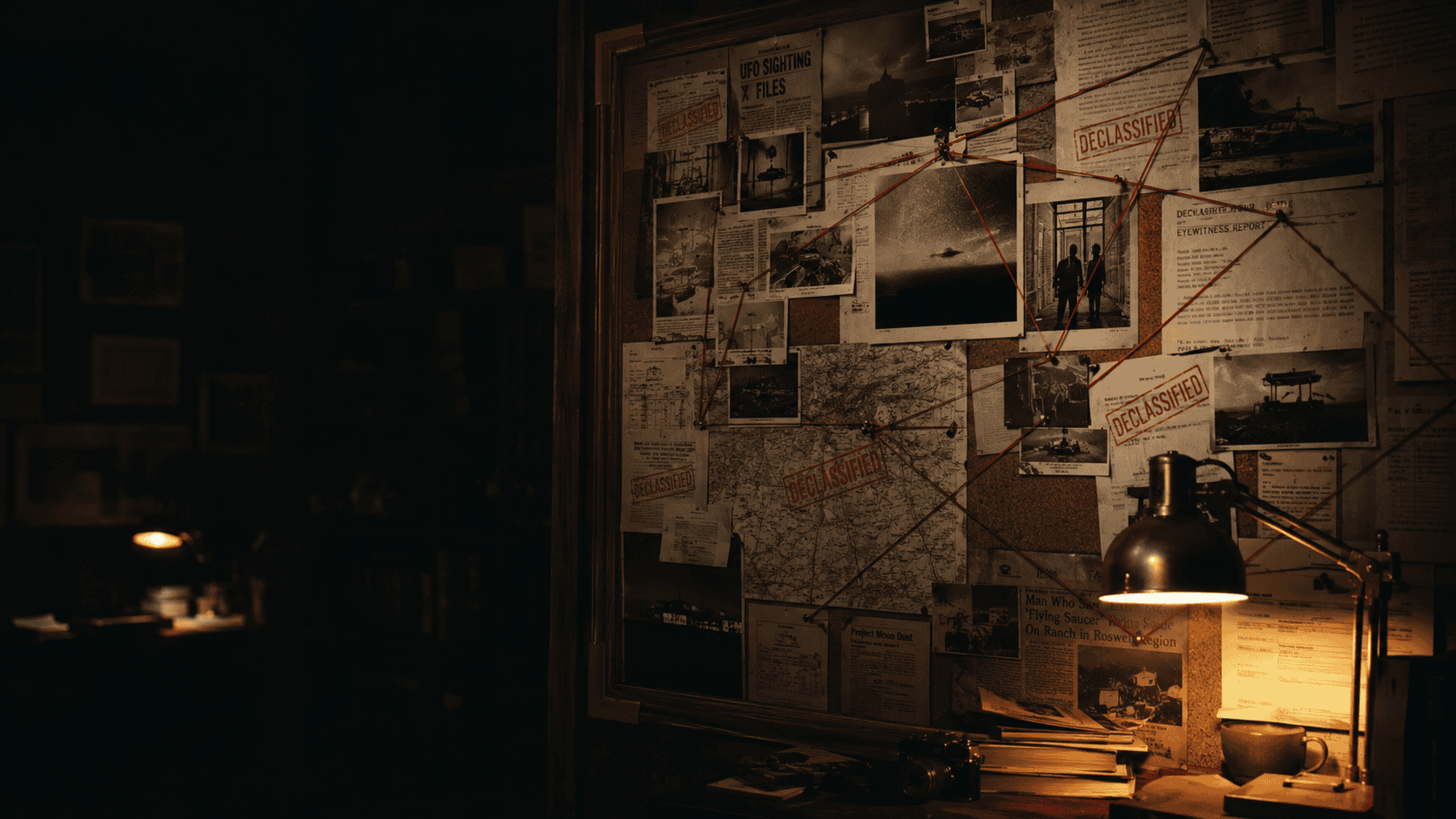
The list of confirmed conspiracies.
Is longer than the list you were told to laugh at.
COINTELPRO. MKUltra. Tuskegee. Operation Mockingbird. NSA bulk surveillance. Each one was called a conspiracy theory at the time. Each one is now declassified, court-documented, or publicly acknowledged.
Conspiracy theories that turned out to be true are not rare exceptions. The label “conspiracy theory” is not evidence. It is a containment strategy applied to inconvenient questions before those questions become impossible to deny. The record proves it. Calling something a conspiracy theory has never been the same as showing it is false.
Conspiracy theories that turned out to be true: what the label actually means in practice.
The phrase functions as a verbal kill switch in modern political and social discourse. It does not describe a claim. It describes a category of claims that the speaker wants disqualified from serious consideration. The disqualification happens before evidence is examined, not after. Conspiracy theories that turned out to be true expose how this works in retrospect.
A conspiracy is a private agreement between multiple parties to do something they would rather not be observed doing. Conspiracies are common, well-documented, and prosecuted regularly under conspiracy law. Antitrust cases are conspiracy cases. RICO prosecutions are conspiracy cases. Insider trading is conspiracy. The legal system assumes conspiracies happen frequently and provides the apparatus to prove them. Redacted, read Chapter 16 is the public discourse that refuses to apply the same standards to political and institutional conspiracies that the legal system applies to commercial ones.
The phrase “conspiracy theory” entered popular usage in a specific way that the historical record now makes possible to trace. In 1967, the CIA distributed Dispatch 1035-960 to its station chiefs. The document prescribed tactics for handling skeptics of the Warren Commission’s conclusions about the Kennedy assassination. The recommended tactics included urging media contacts to label Warren Commission skeptics as conspiracy theorists, framing their questioning as dangerous to national unity, and using ridicule, peer pressure, and social isolation as containment tools.
The dispatch did not invent the phrase. The phrase existed before 1967. What 1967 added was the systematic weaponization. Make asking the question socially costly. Label the questioner instead of answering the question. Use peer pressure to enforce the boundary. The answer becomes irrelevant once the asking has been made expensive enough. Redacted, read Chapter 16 is the predictable result of running this strategy at scale for sixty years.
The strategy works because most people care more about social belonging than about being correct. The fear of being labeled a conspiracy theorist is, for most people, more powerful than the desire to investigate inconvenient claims. The label trains the population to police its own curiosity. The institution that wants the question buried never has to do the burying directly. The believer does it on the institution’s behalf.
Read the Full Investigation
Chapter 16: Architecture of Control →
Social cost is more effective than censorship.
The institutional Church learned this with apocrypha. The auto industry learned this with jaywalking. The intelligence agencies learned this with conspiracy theory. The pattern is the same. Make the inquiry socially costly and the population stops inquiring. Censorship is expensive and visible. Self-censorship is free and invisible.
A person who genuinely wants to be taken seriously in modern professional life cannot afford to be associated with conspiracy theories. The label carries enough social weight that even raising a documented historical case, like Operation Mockingbird or MKUltra, in casual conversation produces visible discomfort in the listeners. The discomfort is not about the evidence. It is about the social cost of being seen taking the topic seriously.
This is the fear loop the architecture depends on. The fear is not of the truth. The fear is of being categorized as someone who entertains such ideas. The category is the punishment. The institution wanting the inquiry suppressed does not need to engage the evidence. The institution just needs to make sure the social cost of engagement stays high. Redacted, read Chapter 16 is the operational outcome of the loop running successfully for decades.
“The most potent weapon in the hands of the oppressor is the mind of the oppressed.”
Steve Biko
Bruce Lipton‘s research at Stanford demonstrated that the cell responds to perceived environment, not actual environment. A nervous system convinced that asking a question is socially dangerous will produce the same stress response as actual physical danger. The body shuts down inquiry to protect status. The believer experiences this as common sense, as not wanting to be that person, as having better things to do. The architecture works because it does not feel like architecture. It feels like Redacted, read Chapter 16 that every reasonable person already accepts.

Master Thyself
700+ pages. 24 chapters. 400+ citations. The complete map of confirmed conspiracies, the pattern they share, and the recognition framework that lets you evaluate current claims clearly.
A partial inventory of conspiracy theories that turned out to be true.
Each item below was called a conspiracy theory in its own decade. Each is now documented through declassified records, court filings, congressional testimony, or formal admission. The list is partial. The point is the pattern.
COINTELPRO
FBI program (1956 to 1971) to surveil, infiltrate, and discredit American political organizations including civil rights groups, anti-war activists, and Black leaders. Publicly denied for fifteen years. Exposed by a burglary of an FBI field office in 1971. Officially acknowledged in the 1976 Church Committee report. Martin Luther King Jr. was a documented target.
MKUltra
CIA program (1953 to 1973) of nonconsensual human experimentation including LSD dosing, hypnosis, sensory deprivation, and psychological torture. Targets included American and Canadian citizens, often patients in psychiatric hospitals who had no idea they were being experimented on. Records mostly destroyed in 1973 on the order of Director Richard Helms. Surviving documents released under FOIA in 1977.
The Tuskegee Experiments
Forty-year US Public Health Service study (1932 to 1972) on 399 Black men with syphilis, deliberately untreated to observe the disease’s progression. The men were told they were receiving free healthcare. Effective treatment with penicillin existed by 1947. They were never offered it. Exposed by an Associated Press reporter in 1972. The federal government formally apologized in 1997.
Mass Surveillance of Citizens
NSA bulk collection of phone metadata, email records, and digital communications. Denied repeatedly under sworn congressional testimony, most famously by Director of National Intelligence James Clapper in March 2013. Confirmed three months later by the Edward Snowden disclosures in June 2013. The programs continued in modified form after the disclosures.
Iran-Contra
Reagan administration officials secretly sold arms to Iran, then funneled the proceeds to fund the Contras in Nicaragua, in violation of an explicit congressional ban. Initially denied. Confirmed by the 1987 congressional hearings and the Tower Commission Report. Several officials were convicted, though most convictions were later overturned or pardoned.
Operation Northwoods
1962 proposal by the Joint Chiefs of Staff to fabricate terrorist attacks against American civilians and military targets in order to manufacture public support for war with Cuba. Approved by the Joint Chiefs. Rejected by President Kennedy. Declassified in 1997 under the JFK Assassination Records Review Board. The document exists. The proposal was real.
Each of these items was, in its own time, a conspiracy theory. Each was dismissed with the same social tactics the CIA dispatch prescribed in 1967. Each was eventually confirmed by documentary evidence that the institution had been concealing. The Redacted, read Chapter 16 only works while the documents remain classified. Once the documents come out, the dismissals look exactly like what they were.
The CIA did infiltrate the media. It was confirmed in 1976.
Operation Mockingbird is one of the cleanest examples of the pattern. For decades it was called a conspiracy theory. Then the Church Committee documented it in detail. The official story changed overnight. The phrase “conspiracy theory” continued to attach to anyone who pointed out the implications.
The 1976 Church Committee Report, formally titled “Final Report of the Select Committee to Study Governmental Operations with Respect to Intelligence Activities,” documented that the CIA maintained relationships with hundreds of American journalists working for major media outlets. These relationships ranged from informal information exchange to direct financial compensation. CIA Director William Colby testified to the committee that the agency owned outright a significant number of foreign journalists and maintained working arrangements with many American ones.
The committee’s findings were specific. Major newspapers, broadcast networks, and wire services had compromised reporters. Editors at multiple outlets were briefed regularly by intelligence officers. Stories were placed, shaped, or suppressed at agency request. The full scope of the program, known internally by various code names but referred to in the press as Operation Mockingbird, was extensive enough that the committee’s report devoted significant attention to it. The report is publicly available. Anyone can read it. Redacted, read Chapter 16 is the ongoing pretense that media independence is the default condition.
The CIA was officially prohibited from operating against American citizens after Church Committee reforms. The mechanisms by which the agency maintained influence in domestic media were officially curtailed. Whether the actual practice was curtailed, or simply restructured, is a question the surviving documentary record cannot fully answer. The architecture’s instinct, when caught, is not to dismantle. The instinct is to restructure under different paperwork.
“The CIA owns everyone of any significance in the major media.”
William Colby, former CIA Director, quoted in The Crimes of Patriots by Jonathan Kwitny
The implications for the modern news environment are obvious. If the CIA was running journalists at scale in the 1950s through 1970s, with the institutional consensus that this was the default operating posture for an intelligence agency, the question is not whether something similar continues today. The question is what the modern equivalent looks like. The full architecture of how this overlaps with the broader divide-and-conquer machinery is laid out on PolarityCode. Redacted, read Chapter 16 is the assumption that an institutional capacity, once developed and proven effective, was ever simply abandoned.
Every one of these conspiracy theories that turned out to be true followed the same arc.
Look at the pattern across the documented cases. The pattern is so consistent that recognizing it becomes a useful tool for evaluating current claims.
Phase 1: The Operation. The institution does the thing. The operation is secret. Participants are vetted, compartmentalized, and given cover stories. Documentary trails are minimized. The operation runs for years or decades.
Phase 2: The Leaks. Information starts to surface. Whistleblowers come forward. Burglaries, leaks, accidents, or simple human error puts pieces of the operation into public view. Investigative journalists or activists begin to assemble the picture. The institution’s response is denial.
Phase 3: The Dismissal. The emerging claims are labeled conspiracy theories. Skeptics are framed as paranoid, mentally ill, attention-seeking, or politically motivated. The CIA’s 1967 dispatch tactics get applied. Media outlets, including ones compromised by the operation itself, run pieces that ridicule the claims. The social cost of taking the claims seriously rises. Most of the public stops paying attention. Redacted, read Chapter 16 is the standard response at this phase.
Phase 4: The Forced Confirmation. The documentary evidence becomes overwhelming. Court cases produce subpoenaed records. Whistleblowers provide unfalsifiable corroboration. Congressional committees, FOIA releases, or scholarly research turn the claims into established history. The institution issues a partial admission, often framed as a historical regret rather than an ongoing pattern.
Phase 5: The Memory Hole. The confirmed conspiracy becomes a discrete historical event, taught with sanitized context, framed as an aberration from an otherwise functional system. The pattern is broken into individual cases so that the underlying architecture stays invisible. New operations begin while the audience is processing the old ones. Redacted, read Chapter 16 is what keeps the cycle running.
The cycle is not theoretical. It is documented across COINTELPRO, MKUltra, Tuskegee, Iran-Contra, Mockingbird, Northwoods, and dozens of other cases. The shape is consistent. Recognizing the shape is the recognition framework the institution most wants to prevent. Once a person can identify the dismissal phase as a phase rather than a verdict, the social cost of engaging current inquiry drops. The architecture loses its most reliable lever.
Recognition changes the price of inquiry.
Practical guidance. Apply the same evidentiary standards to political and institutional conspiracies that the legal system applies to commercial ones. Do not treat the label “conspiracy theory” as evidence. Treat it as a containment marker that tells you which questions have institutional pressure attached.
A useful rule. When a claim is dismissed primarily through ridicule, social cost, and labeling rather than through evidentiary engagement, the dismissal is itself a data point. Institutions with evidence engage the evidence. Institutions without evidence engage the reputation of the claimant. The behavior of the dismissal tells you which mode the institution is operating in.
Another useful rule. When a confirmed historical conspiracy matches a structural pattern that current claims also fit, take the current claims more seriously than the social environment is recommending. The dismissal of current claims will use the same tactics that dismissed the confirmed ones. The phase the current claims are in is not a function of their truth. It is a function of the documentary evidence’s current state. Redacted, read Chapter 16 is what fills the space while the documents stay classified.
The full case for how to evaluate current claims against the historical pattern of confirmed conspiracies, including the specific markers that distinguish productive inquiry from genuine paranoia, is in Chapter 16 of Master Thyself. The book also covers the underlying psychology of the social-cost mechanism, the architecture of attention capture that makes the labeling effective, and the practical framework for thinking clearly in an information environment designed to disable clear thinking. The mechanism only works while it is invisible. Redacted, read Chapter 16 stops being effective the moment you can name what it is.
Frequently Asked Questions
What is a conspiracy theory?
Strictly speaking, a conspiracy theory is any claim that two or more parties acted in concert in a way they preferred not to be observed. The legal system handles conspiracy claims regularly under antitrust, RICO, insider trading, and other statutes. Conspiracies happen often and are commonly proven. The pejorative use of ‘conspiracy theory’ to mark a claim as automatically unreliable is a much more recent and politically motivated usage.
Are all conspiracy theories true?
No. Some conspiracy theories turn out to be false. Some are genuinely paranoid constructions with no evidentiary support. The point is that the label ‘conspiracy theory’ is not, by itself, evidence either way. Each claim has to be evaluated on its own evidence. Dismissing a claim because it has been labeled a conspiracy theory is not analysis. It is social compliance.
When did the term ‘conspiracy theory’ become a slur?
The pejorative usage was systematically weaponized after the CIA distributed Dispatch 1035-960 in 1967. The dispatch prescribed labeling Warren Commission skeptics as conspiracy theorists, framing their questioning as dangerous, and using social pressure as a containment strategy. The phrase existed before 1967, but the systematic use as a kill switch dates from that document.
What are the most famous confirmed conspiracies?
COINTELPRO (FBI surveillance and disruption of American political groups), MKUltra (CIA human experimentation), the Tuskegee syphilis study, Iran-Contra, Operation Mockingbird (CIA media infiltration), Operation Northwoods (proposed false flag operations against Americans), and the NSA bulk surveillance programs revealed by Snowden. Each was dismissed as a conspiracy theory before being documented and confirmed.
What is Operation Mockingbird?
Operation Mockingbird is the informal name for the CIA’s program of cultivating relationships with American journalists in major media outlets. Documented in the 1976 Church Committee report, the program involved hundreds of journalists, ranging from informal contacts to direct financial relationships. CIA Director William Colby acknowledged the scope of the program in testimony.
What is Operation Northwoods?
A 1962 proposal by the Joint Chiefs of Staff to manufacture support for war with Cuba by fabricating terrorist attacks against American civilians and military targets. The proposal included hijacked planes, bombings, and assassinations to be blamed on Cuban operatives. President Kennedy rejected the proposal. The document was declassified in 1997 under the JFK Assassination Records Review Board.
How do I distinguish a real conspiracy claim from paranoia?
Apply the same standards a court of law applies. Look for documentary evidence, corroborated testimony, motive and opportunity for the alleged actors, and a pattern that fits known structural behavior. A claim supported by leaked documents, whistleblower testimony, and consistent historical patterns is operating in a different evidentiary space than a claim supported by intuition or pattern-matching alone. The legal framework is reasonably good. It just needs to be applied consistently.
Still with us?
Twelve more questions.
Each of these threads is traced to its source in the fuller investigation. If any of them pull, that is the door.
What if …
What if the CIA’s 1967 Dispatch 1035-960 still shapes how dismissal works today?
What if every confirmed conspiracy followed the same five-phase arc and you can recognize the phases?
What if Operation Mockingbird never ended, it was just restructured?
What if the social cost of being labeled is what does most of the institutional work?
What if MKUltra’s psychological techniques continued under different program names after the public exposure?
What if Operation Northwoods being a real proposal means similar proposals exist in classified files we have not seen?
What if the institutions caught running conspiracies were never structurally reformed, only paperwork-reformed?
What if applying legal-system evidentiary standards to political conspiracies would produce many more convictions?
What if the journalists who ridicule conspiracy theories include the very ones the agencies still cultivate?
What if you have already changed your mind on a confirmed conspiracy and never tracked what that should imply about the dismissal process?
What if Edward Snowden’s disclosures are the floor of NSA surveillance capacity, not the ceiling?
What if recognizing the dismissal pattern is the entire response, and nothing else has to happen for the architecture to lose its leverage?